
SITE_MENU
Office 214, 10/3 Rylsky Lane, Kyiv
Currently, office is remote; available via phone and messengers Mon-Thu, 10:00 am - 6:00 pm, Fri 10:00 am - 3:00 pm.
In Ukraine, there has long been a steady demand for attentive, experienced, and intelligent nannies who not only provide care but also support early development, emotional security, and a child’s learning.
Among Ukrainian nannies, there are many true professionals—women who for years have independently set their own standards, improved through practice, adapted to the demands of discerning families, and achieved a high level of quality in their daily work. At present, the only form of professional training for nannies is short-term courses provided by specialised nanny’s agencies in Kyiv. These offer knowledge in childcare, education, and child development at home, though they are not covered by industry standards or quality control systems.
This raises an important question: how can the existing potential be strengthened, and how can a sustainable professional environment be ensured—with clear educational programmes, qualification frameworks, and mechanisms for public and state recognition? One possible answer lies in international experience.
Across the world—particularly in the UK, France and the US—there has long been a comprehensive system of professional training for career nannies. This involves formal education in child psychology, development, pedagogy, safety, nutrition, as well as certification of practical skills and professional ethics.
 For example, Norland College in the UK has been training elite nannies for over 130 years, and its graduates are invited to work in the world’s most prestigious families, including royal households.
This higher education institution offers a three-year full-time bachelor’s degree in Early Childhood Development (BA Hons), combined with the practical Norland Diploma. The programme concludes with a one-year paid placement in a family. Graduates are prepared not only as childcare specialists but also as bearers of ethical, professional, and cultural standards.
Norland College graduates—known as Norlanders—benefit from exceptional lifelong professional support through the in-house agency. After achieving the status of “Norland Nanny”, they receive close mentorship, access to continuing professional development (CPD) programmes, and the opportunity to seek support directly from the college, agency specialists, or a private alumni Facebook group—no matter where in the world they are.
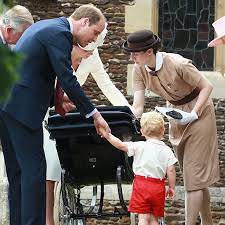 This support includes exclusive access to job opportunities (with guaranteed employment and demand exceeding supply) offered only to Norlanders, as well as participation in alumni events, additional training programmes, individual consultations, and events organised by the Professional Association of Norlanders (PAN).
In essence, to be a Norlander means to belong to a lifelong professional community where prestige, global career opportunities, and the highest levels of support are as fundamental as the education itself.
Being on the client list of the Norland Agency is like holding a key to a private club. It is the only official way to hire a nanny trained at the legendary college—specialists who work with the world’s most influential families.
In the United States, the professional nanny community is shaped by the International Nanny Association (INA). This organisation sets industry standards, administers exams in childcare, safety, and ethics, and hosts annual conferences that enhance the prestige of the profession. Training lasts from several weeks to several months and covers child psychology, development, first aid, and professional ethics. Courses are taught by practitioners who themselves work in leading families, making the programme highly practical.
Certified INA nannies gain access to the INA Job Board, a platform that connects them with accredited agencies and families, opening doors to prestigious opportunities in the US and abroad. Membership in INA is lifelong: specialists gain mentorship, access to international job opportunities, and continuous professional development.
The French École des Nounous is renowned for its unique approach: in addition to core subjects such as child development, nutrition, and first aid, students take modules on “cultural adaptation.” They are trained to work in families of diplomats, artists, and the business elite. Programmes last from several months to two years and always include hands-on practice within families.
Upon completion, graduates are entered into an internal registry accessible only to partner agencies, ensuring official and prestigious employment. This creates a kind of “closed club” of French nannies who, after training, secure high-status positions in Paris, on the French Riviera, and far beyond France.
Hence, in the developed world, the role of a nanny has long ceased to be just a private service for families. It is part of a wider culture of care that places childhood at the centre as the most valuable stage of personal development.
That is why professionalism in this field is not merely a matter of individual family choice but a reflection of societal values. The ability to entrust a child to a specialist with knowledge, ethics, and professional culture is a sign of the maturity and responsibility of the modern world.
Ultimately, the art of childcare is the art of the future. Where the work of nannies is respected, childhood itself is truly valued.
This article is an exploration aimed at rethinking the professional role of the nanny, showcasing the standards already established worldwide, and identifying what we, as a society, can aspire to in the future.
Don’t miss the continuation of this exclusive series of articles on career nannies by the author—Halyna Dubliak, founder and director of the domestic staffing agency Sweet Home, with over 17 years of experience in recruitment and staff training. In the next article, you will learn what the concept of a “career nanny” really means and what defines her professional status.
